
Resident Evil: Requiem for the Launch Window
What every game studio can learn from Capcom's 18-month marketing engine


Capcom’s been on cooking lately, and Resident Evil: Requiem may well be their best dish in recent memory.
But Capcom didn’t just ship an excellent game. They also shipped a well-oiled, finely-tuned marketing system that serves as an example for any developer charged with the unenviable task of marketing their game in an increasingly crowded space. It’s a veritable masterclass in foundational marketing principles that most studios (and honestly, most companies writ large) have forgotten.
The results speak for themselves, really: six million copies in 17 days, the fastest any Resident Evil title has ever reached that milestone. For context, RE4 Remake took three months just to hit five million, while RE Village took five months. Requiem blew past five million in under a week, kept accelerating, and still shows no signs of slowing down.
The game’s peak Steam concurrent players hit 344,214 — more than double the franchise record set by RE4 Remake’s 168,191 players, and higher than RE2, RE3, and RE4 Remake combined. In the UK, PC accounted for 36% of launch sales, up dramatically from previous entries (which were primarily PlayStation events); in fact, analysts estimate that Steam alone drove over half of total unit sales globally.
And yeah, the game itself is phenomenal. I picked it up myself ahead of GDC because the buzz was impossible to ignore, and so far, I reckon it’s earned every last bit of it.
But despite what industry common knowledge would have you believe, “just make a great game” isn’t a marketing strategy. Plenty of amazing games die in obscurity every single day on Steam.
If you don’t believe me, simply apply some logic for a second: in a space where over 20,000 titles launch every single year, but with only so much gamer attention to go around (and let’s not forget that video games are also competing with Netflix, TikTok, and good old-fashioned doomscrolling on X), it’s practically inevitable that most games will fall by the wayside. Yes, including many great ones.
So, how did Capcom beat the odds? Part of it is, undoubtedly, strong brand recognition. And I’ll grant that it’d be practically impossible for any title in a franchise as iconic as Resident Evil to fail in the same way many indies do.
But would Requiem have broken the records it did if Capcom just released it into the wild, with no marketing support whatsoever? Absolutely not.
So again, how did they do it?
By building a lean, mean, 18-month visibility engine, with strategic beats at every major inflection point in the gaming calendar. And when you look closely, the playbook maps almost perfectly onto foundational marketing theory — the kind of stuff that’s been in business textbooks for nearly a century, but most game developers ignore in practice.
Let’s break it down.
Ansoff’s Matrix: Market development in action
Igor Ansoff’s growth matrix gives companies four strategic options for increasing their sales:
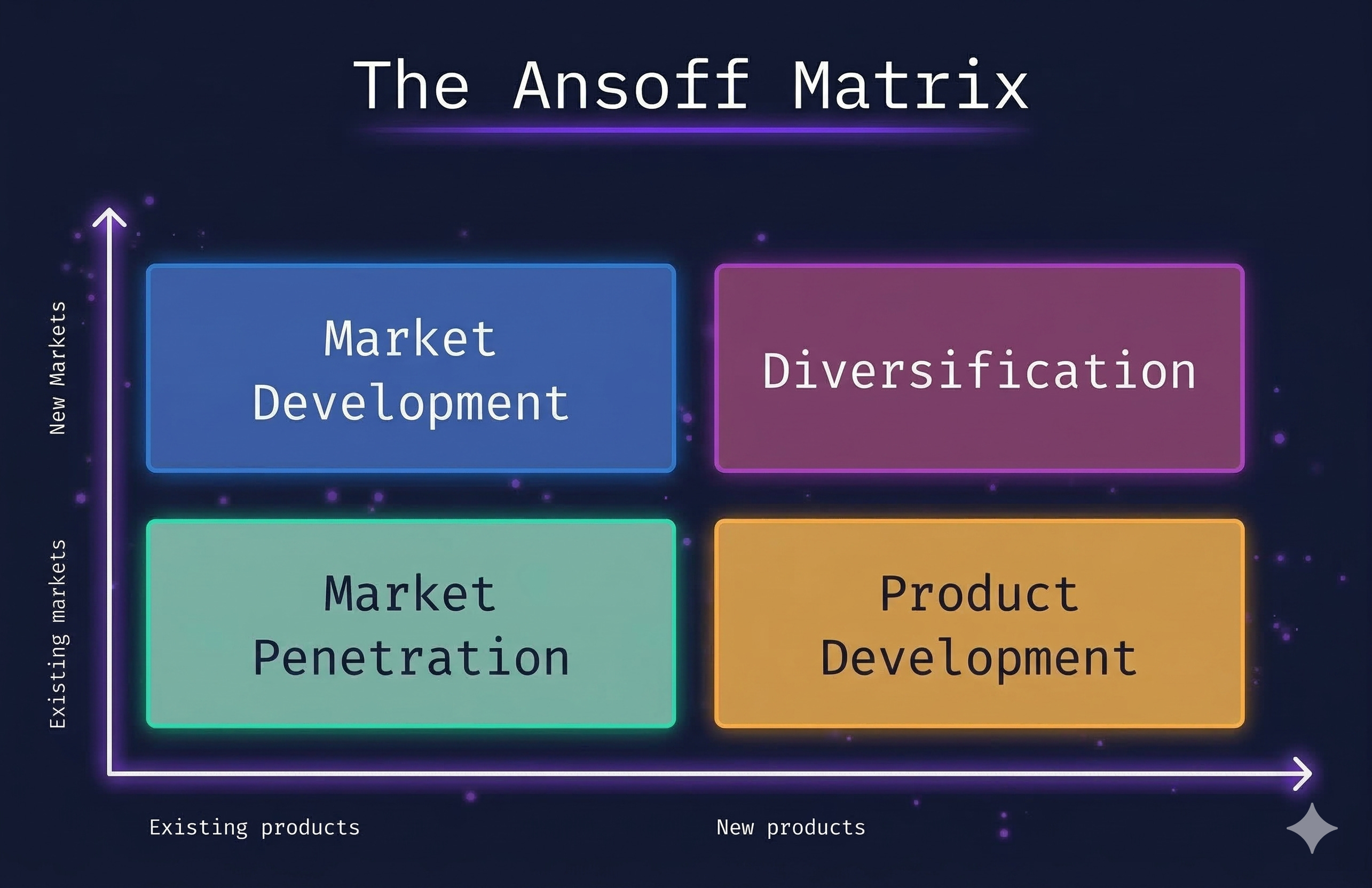
Market Penetration: sell existing products to existing customers
Product Development: sell new products to existing customers
Market Development: sell existing products to new customers
Diversification: create something entirely new
Capcom’s Requiem campaign is a textbook example of market development: taking a proven franchise and systematically expanding it into new customer segments.
Ever since 2017, Capcom announced every new Resident Evil title at a PlayStation event. But Requiem broke that pattern, debuting at Summer Game Fest — a multiplatform show.
Why? Because PC is where growth is happening. And Capcom’s platform shift signaled to an entirely new segment of potential buyers that Resident Evil was coming to meet them where they already were.
But Capcom was just getting started! In September, Capcom announced that Requiem was coming to the Switch 2, tapping into decades of Nintendo-Resident Evil history going back to the N64 era. Then came brand partnerships with Nvidia, Porsche, Hamilton watches, and Fortnite; each partnership reached audiences who might never have even considered playing a survival horror game before.
Most studios and publishers announce where they’ve always announced, but Capcom announced where their next customers actually were. That’s market development, and it paid off with a platform split that would have been unthinkable even just a few years ago.
AIDA in 18 Months
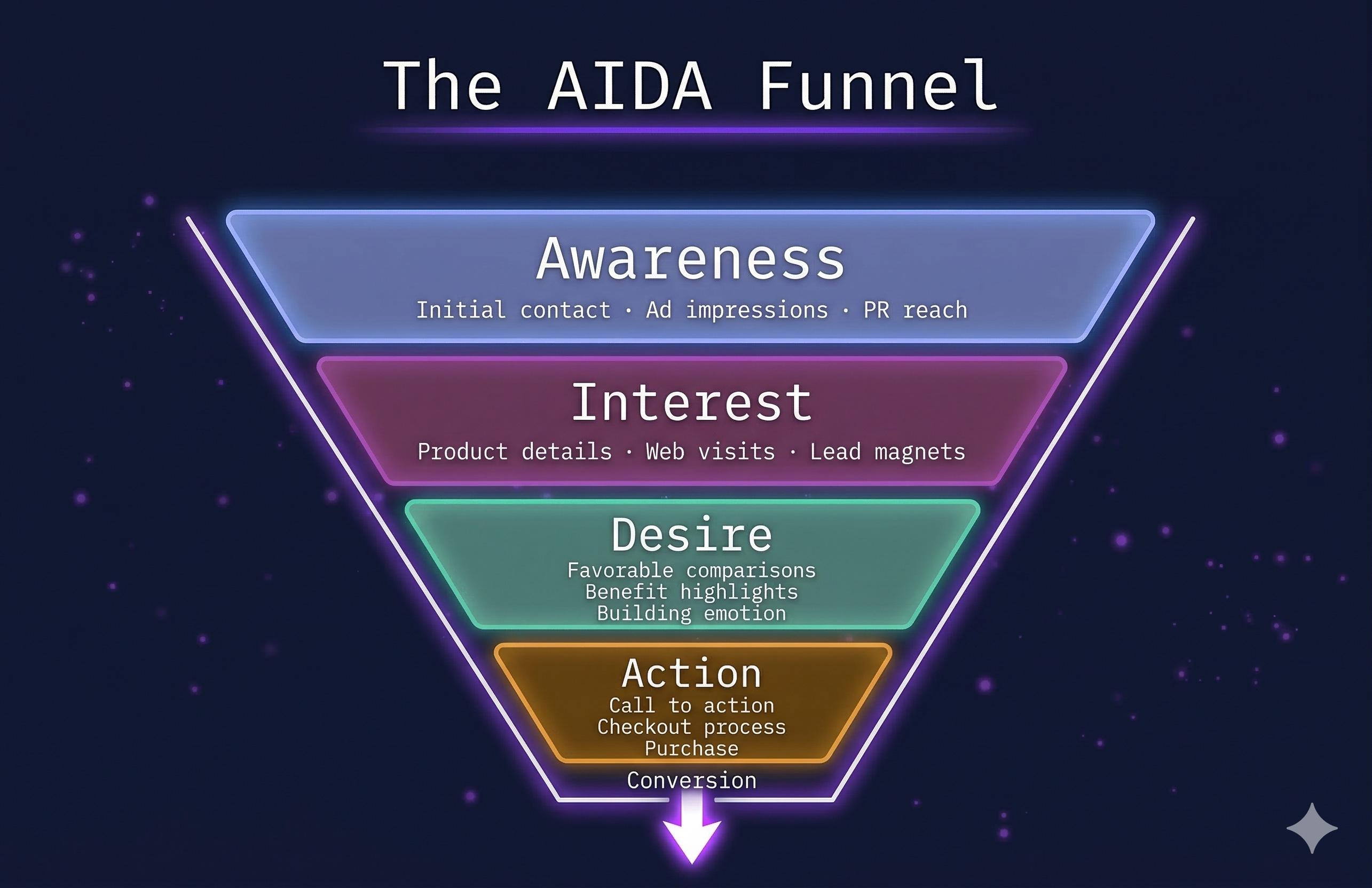
The AIDA model — Awareness, Interest, Desire, Action — is one of marketing’s oldest frameworks. It’s also one of the most frequently botched in gaming, where many studios (and even some publishers, who really should know better) compress the entire funnel into a six-week launch window and wonder why their conversion rates are so terrible.
But not Capcom! They stretched the funnel across 18 months and gave each stage its own dedicated moment:
Awareness
Requiem’s Summer Game Fest reveal in June 2025 introduced new protagonist Grace Ashcroft with a trailer that also flashed Raccoon City, casting the widest possible net. Requiem was the most talked about game of the show, and by month’s end, wishlists had surged past one million.
Interest
Gamescom and PAX demos in August finally put the game in players’ hands, and September’s Switch 2 announcement via Nintendo Direct generated a fresh wave of coverage that expanded interest to an entirely new hardware audience.
Desire
The Game Awards reveal in December brought back Leon S. Kennedy, arguably the franchise’s most beloved character. More than just fan service, this reveal was strategically timed to convert passive awareness into active anticipation heading into the new year. Requiem was once again the most covered game of the show, and hit the highest trailer views.
Action
In early 2026, Capcom ramped up with a standalone broadcast, appearances in Nintendo and Sony digital events, and those aforementioned cross-industry brand partnerships. By launch day, Requiem was the second most anticipated game of 2026 by every measurable metric — wishlists, social engagement, trailer views, and press coverage. Only GTA 6 was ahead (naturally).
———
Each beat generated press, buzz, and excitement, and these compounded with each new announcement, reaching a wider audience while reinforcing commitment from people already in the sales funnel.
Segmentation, Targeting, and Positioning (STP)
Segmentation, Targeting, and Positioning (STP) is marketing 101, but it’s remarkably rare to see it executed well across a single campaign. Capcom, however, pulled it off by treating each major reveal as a segmented communication to a different audience — while, crucially, never alienating the core.
The Summer Game Fest reveal targeted the multiplatform and PC-curious crowd. The new protagonist, Grace Ashcroft, created an entry point for players unfamiliar with Resident Evil lore — she’s an FBI analyst, introverted and easily scared, a deliberate contrast to the franchise’s traditional action heroes. As such, new players could identify with her.
The same trailer included glimpses of Raccoon City — targeted squarely at the existing fanbase who’d instantly recognize it. Two audiences, one piece of content, no compromises.
Meanwhile, the Nintendo Direct announcement specifically targeted the Nintendo audience, leveraging platform nostalgia. The Game Awards Leon reveal targeted the hardcore, long-tenured Resident Evil faithful, while the Fortnite partnership reached a massive Gen Z audience that might never visit a gaming news site.
Consistent brand positioning was the common thread through all these different segments and touchpoints. Capcom always presented the game as a premium survival horror experience — that never shifted. Only the entry points changed.
Diffusion of Innovation
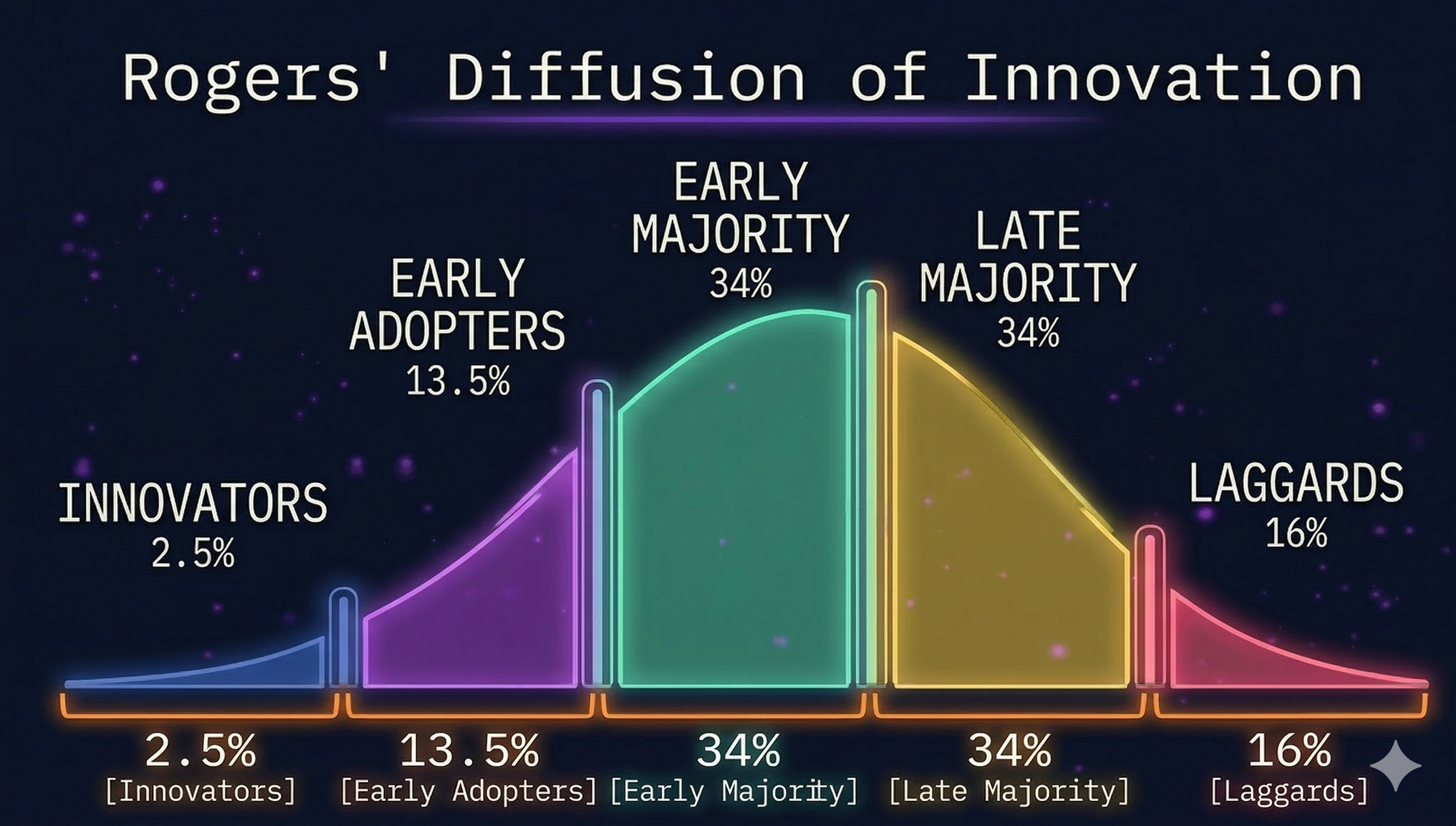
Everett Rogers’ Diffusion of Innovation theory describes how new products spread through a population:
Innovators
Early adopters
Early majority
Late majority
Laggards
Capcom’s rollout mirrors this curve quite precisely:
The Summer Game Fest reveal and early media hands-on captured the innovators — the press, content creators, and hardcore fans who actively seek out new information. These people drive early wishlist numbers and generate the initial wave of coverage.
The Gamescom and PAX demos captured early adopters — players who want to try before they commit, and who spread word-of-mouth through their communities.
The Game Awards Leon reveal and the escalating brand partnerships through early 2026 activated the early majority — mainstream gamers who buy based on accumulated buzz, strong review scores (Requiem currently holds an 88 on Metacritic), and social proof.
The Switch 2 launch and the Fortnite collaboration began pulling in the late majority — people who might not typically buy a horror game, but got curious from Requiem’s sustained visibility and cross-platform accessibility.
Each phase built on the last, and no single moment carried the launch’s entire weight.
Product-Market Fit = Everything
Now, I should mention that none of this marketing machinery would have worked if the product itself didn’t deliver. And Capcom deserves credit for this beyond the marketing team.
Requiem was designed for broad appeal without sacrificing the franchise’s unique identity. Multiple difficulty settings accommodate newcomers and veterans alike, while real-time switching between first-person and third-person perspectives lets players choose their preferred experience. The dual-protagonist structure (Grace’s survival horror tension alongside Leon’s more action-oriented combat) gives the game two distinct gameplay modes that appeal to different player motivations.
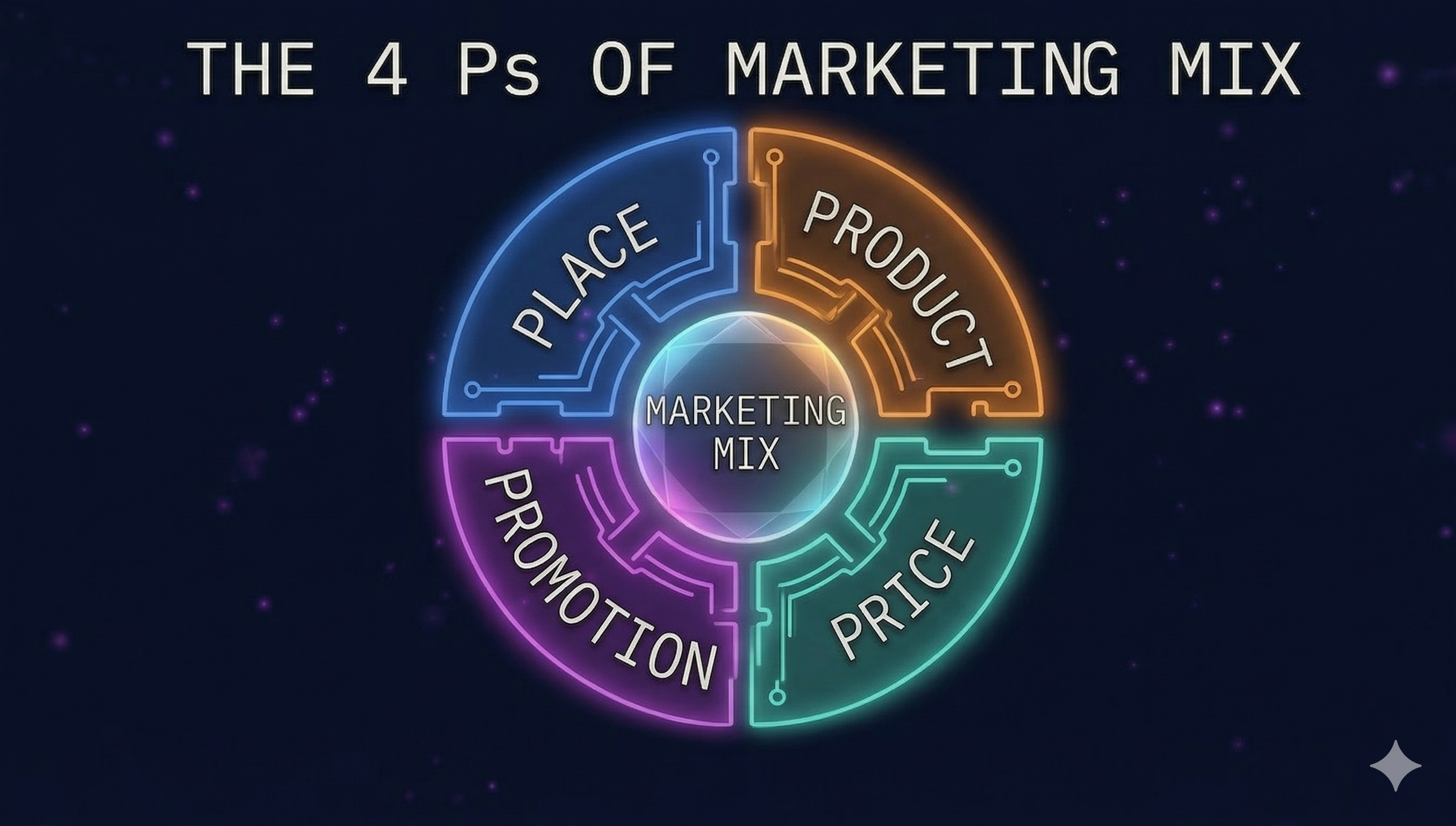
These are the 4 “P”s of Marketing, working in harmony:
The product was built to serve multiple segments.
The price held at the standard $70 premium tier, signaling confidence and quality.
Place was multiplatform from day one: PS5, Xbox Series X/S, PC, and Switch 2, all at the same time.
And promotion was the 18-month drumbeat we’ve been dissecting.
When all four Ps align, that’s when you sell six million units in 17 days.
So, what does this mean for studios that aren’t Capcom?
Yes, I know Capcom is a massive publisher, and Resident Evil is one of gaming’s most iconic and storied franchises.
But you don’t need Capcom’s budget to apply Capcom’s logic, nor do you need Resident Evil’s brand recognition to get Resident Evil-sized results! The principles actually scale down quite beautifully.
Here’s how:
Start your marketing when development starts, not six weeks before launch — Capcom’s funnel ran for 18 months, a full year and a half before launch! Meanwhile, most indie (and even quite a few AA) studios treat marketing as a post-production afterthought. But the data consistently shows that Steam pages that go live six or more months before launch generate dramatically more wishlists and opening-week sales. If your marketing starts in pre-production, your audience has time to move through every stage of the funnel naturally.
Follow your audience to where they actually are – If your players are on TikTok and Discord, then your announcement doesn’t belong in a press release. Capcom broke a decade of tradition and precedent because the data told them that PC was growing. Ask yourself: what is the data telling you about where your players spend their time?
Design your campaign as a sequence of compounding moments, not a single launch spike. — Every touchpoint should expand your reach while deepening existing interest. Map your reveals and announcements to the AIDA framework, and give each stage of the funnel its own moment.
Segment your audience and speak to each segment individually — You can reach multiple audiences with a single game, but not with a single message. Identify who your different player segments are, and craft touchpoints that speak to each of them. However, you must keep your core positioning consistent.
Build a system, not a campaign – Campaigns end, but systems sustain. Capcom didn’t run a Requiem marketing campaign; they built a Requiem marketing engine that generated compounding momentum over a year and a half.
That last part is exactly what I help indie devs with: building marketing engines that create sustained momentum (and sustained sales) instead of one-and-done launches. If this sounds like something you’d like for your upcoming (or existing!) game, book a call with me at the link below! I’d love to hear what’s working (and what’s not) in your studio’s marketing:
What’s one game you think nailed its marketing rollout… or completely botched it? Drop it in the comments!
To your success,
~Jay
Spawn Point Marketing offers fractional marketing leadership services for indie and AA game studios. For more information, visit https://spawnpointmarketing.com